

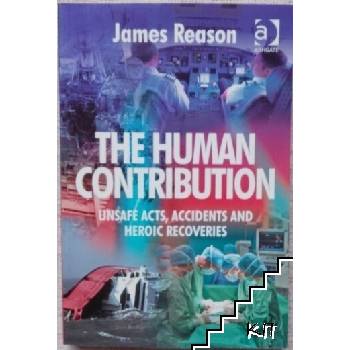
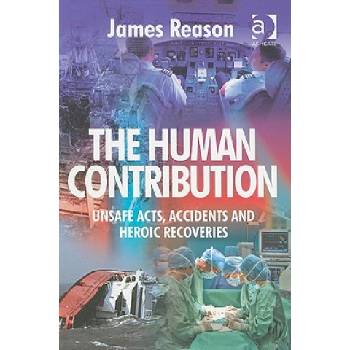
The Human Contribution
Състояние: Много добро Забележка: Печат на първа страница. Подзаглавие: Unsafe Acts, Accidents and Heroic Recoveries Издателство: Ashgate Град на издаване: --- Наличност: singular...
70,00 €|136,91 лв.*
Информация в магазина
Най-евтини оферти (2)
The Human Contribution

The Human Contribution

Human Contribution | James Reason
Описание на продукта
Състояние: Много добро Забележка: Печат на първа страница. Подзаглавие: Unsafe Acts, Accidents and Heroic Recoveries Издателство: Ashgate Град на издаване: --- Наличност: singular...
Параметри на продукта
Език
Английски
Параметри на продукта
Език
Английски
Описание на продукта
Състояние: Много добро
Забележка: Печат на първа страница.
Подзаглавие: Unsafe Acts, Accidents and Heroic Recoveries
Издателство: Ashgate
Град на издаване: ---
Наличност: singular
Ширина (мм): 160
Височина (мм): 234
Дебелина (мм): 20
Корици: Меки
Contents
List of Figures
List of Tables
About the Author
PART 1
INTRODUCTION
Chapter 1
The Human Contribution: Hazard and Hero
Introduction
The structure of the book
About the book
Chapter 2
A Mind User's Guide
Tip-of-the-tongue state
The conscious and automatic modes of control
Three levels of performance
Interacting with the long-term knowledge base
Intentions and the retrieval cycle
Concurrent processing
The relationship between memory and attention:
the blob-and-the-board model
Summing up
PART II
UNSAFE ACTS
Chapter 3
The Nature and Varieties of Human Error
Defining and classifying error
Error myths
Slips and lapses
Rule-based mistakes
Knowledge-based mistakes
Conclusion: a general rule
Contril
Chapter 4
Violations and the Varieties of Rule-related Behaviour
Chernobyl and Zeebrugge
Violations considered as unsafe acts
Who is most likely to violate?
Why do people violate safety rules?
The 'mental economics' of violating
Bad procedures
Procedure-usage
Testing two models of violating behaviour
The varieties of rule-related behaviour
Great improvisers
End piece
Chapter 5
Perceptions of Unsafe Acts
The plague model
The person model
The legal model
The system perspective
Person and system models: getting the balance
right
PART III
ACCIDENTS
Chapter 6
Error Traps and Recurrent Accidents
Accident proneness: a quick survey
Everyday error traps
Recurrent accident patterns
The elements of recurrent scenarios
Cultural drivers
Conclusion
Chapter 7
Significant Accident Investigations
Problems with the past
Changes in accident investigation
The Mahon and Moshansky reports
Has the pendulum swung too far?
Conditions and causes
Counterfactual fallacy
The current view
buchhaus. com
PART IV
HEROIC RECOVERIES
Chapter 8
Training, Discipline and Leadership
The Light Division's retreat at Fuentes de Onoro
(1811)
The withdrawal of the 1st Marine Division from Chosin Reservoir (1950)
Concluding remarks
Chapter 9
Sheer Unadulterated Professionalism
Captain Rostron and the rescue of the Titanic
survivors (1912)
Saving Apollo 13 (1970)
British Airways Flight 09 (1982)
The BAC 1-11 incident (1990)
Surgical excellence (1995-97)
Minor and major events
Concluding remarks
Chapter 10
Skill and Luck
The Gimli Glider
Captain Al Haynes and United 232
Final word
Chapter 11
Inspired Improvisations
General Gallieni and the Paris taxis
Captain Gordon Vette and the rescue of Jay
Prochnow
Conclusion
The Ingredients of Heroic Recovery
Chapter 12
Coping with expected hazards
Coping with unlikely but possible hazards
Generic qualities
Conclusion
PART V
ACHIEVING RESILIENCE
Chapter 13
Individual and Collective Mindfulness
Consistency versus variability
A dynamic non-event
Collective mindfulness
Individual mindfulness
Aspects of resilience
Foresight training at the UK National Patient
Safety Agency
Organisational support
Looking towards the future
Mindfulness and resilience
Chapter 14
In Search of Safety
Introduction
What does the term 'safety' mean?
The two faces of safety
The 'safety space' model
What does a resilient system look like?
The knotted rubber band model
Defining the nature of positive safety
Final words
List of Figures
Figure 2.1 Three levels of performance control
Figure 2.2 The 'blob-and-the-board' model
Figure 5.1 First version of the Swiss cheese model (though it hadn't yet taken on its Emmenthale appearance. Various human contributions to the breakdown of complex systems are mapped on to the basic elements of production
Figure 5.2 Part of the earliest version of the Swiss cheese model. The diagram shows a trajectory of accident opportunity penetrating several defensive layers, and begins to have Emmenthaleish features
Figure 5.3 The early 90's variant of the Swiss cheese model
Figure 5.4 A mid-90s variation with two interacting pathways to an accident
Figure 5.5 The latest version of the Swiss cheese model
Figure 6.1 Showing the unequal liability to accidents in a group exposed to the same hazards over the same time period. The curve represents the chance prediction of event likelihood (Poisson distribution). The columns represent the actual number of accide
Figure 6.2 Kanizsa Triangle
Figure 7.1 Tracing the shifting emphases of accident investigations
Figure 8.1 The manoeuvres required in preparing to receive cavalry on the march.
Figure 8.2 The Battle of Fuentess de Onoro, 5th May 1811
Figure 8.3 Showing the area over which the Chosin Reservoir campaign was fought
The Human Contril
Figure 9.1 A cutaway diagram of the service module, It was the round cryogenic oxygen tank (second layer) that exploded and nearly destroyed the spacecraft
Figure 9.2a Surgical defences in the arterial switch operation represented as Swiss cheese slices in which the holes do not line up
Figure 9.2b Using the Swiss cheese model to represent a typical major event scenario
Figure 9.3a The slice of Cheddar at the left hand end represents coping abilities
Figure 9.3b The mouse nibbling at the slice of Cheddar represents how adverse events, both major and minor, can eat away at limited coping resources
Figure 11.1 Flying the aural box pattern into the VHF range circle
Figure 13.1 Combining individual and collective mindfulness to enhance patient safety
Figure 13.2 The 'three-bucket model for assessing high-risk situations
Figure 13.3 How the bucket contents might be interpreted
Figure 13.4 Tracing the possible progress of developments in patient safety
Figure 13.5 Showing the reduction in variability as the cycle progresses
Figure 14.1 Illustrating vulnerability and resistance. The arrows at the top of the figure represent perturbing forces
Figure 14.2 Showing a number of hypothetical organisations within the same hazardous domain distributed throughout the safety space
Figure 14.3 Summarising the driving forces and navigational aids necessary to propel an organisation toward the region of maximum resistance
Figure 14.4 Three states of the knotted rubber band
Figure 14.5 Showing the resource implications of the knotted rubber band model
List of Tables
Table 2.1 Comparing the properties of the conscious workspace and the long-term knowledge base
Table 3.1 Comparing the properties of exceedances, incidents and accidents
Table 4.1 Summarising the violation 'balance sheet'
Table 4.2 Summarising the 12 varieties of rule-related behaviour
Table 5.1 Comparing the CANDU and RBMK safety features
Table 7.1 Three examples of the distinction between cause and condition
Table 14.1 Summarising the interactions between reactive and proactive measures
Table 14.2 Combining the 3Cs and the 4Ps to produce 12 sets of indicators
Забележка: Печат на първа страница.
Подзаглавие: Unsafe Acts, Accidents and Heroic Recoveries
Издателство: Ashgate
Град на издаване: ---
Наличност: singular
Ширина (мм): 160
Височина (мм): 234
Дебелина (мм): 20
Корици: Меки
Contents
List of Figures
List of Tables
About the Author
PART 1
INTRODUCTION
Chapter 1
The Human Contribution: Hazard and Hero
Introduction
The structure of the book
About the book
Chapter 2
A Mind User's Guide
Tip-of-the-tongue state
The conscious and automatic modes of control
Three levels of performance
Interacting with the long-term knowledge base
Intentions and the retrieval cycle
Concurrent processing
The relationship between memory and attention:
the blob-and-the-board model
Summing up
PART II
UNSAFE ACTS
Chapter 3
The Nature and Varieties of Human Error
Defining and classifying error
Error myths
Slips and lapses
Rule-based mistakes
Knowledge-based mistakes
Conclusion: a general rule
Contril
Chapter 4
Violations and the Varieties of Rule-related Behaviour
Chernobyl and Zeebrugge
Violations considered as unsafe acts
Who is most likely to violate?
Why do people violate safety rules?
The 'mental economics' of violating
Bad procedures
Procedure-usage
Testing two models of violating behaviour
The varieties of rule-related behaviour
Great improvisers
End piece
Chapter 5
Perceptions of Unsafe Acts
The plague model
The person model
The legal model
The system perspective
Person and system models: getting the balance
right
PART III
ACCIDENTS
Chapter 6
Error Traps and Recurrent Accidents
Accident proneness: a quick survey
Everyday error traps
Recurrent accident patterns
The elements of recurrent scenarios
Cultural drivers
Conclusion
Chapter 7
Significant Accident Investigations
Problems with the past
Changes in accident investigation
The Mahon and Moshansky reports
Has the pendulum swung too far?
Conditions and causes
Counterfactual fallacy
The current view
buchhaus. com
PART IV
HEROIC RECOVERIES
Chapter 8
Training, Discipline and Leadership
The Light Division's retreat at Fuentes de Onoro
(1811)
The withdrawal of the 1st Marine Division from Chosin Reservoir (1950)
Concluding remarks
Chapter 9
Sheer Unadulterated Professionalism
Captain Rostron and the rescue of the Titanic
survivors (1912)
Saving Apollo 13 (1970)
British Airways Flight 09 (1982)
The BAC 1-11 incident (1990)
Surgical excellence (1995-97)
Minor and major events
Concluding remarks
Chapter 10
Skill and Luck
The Gimli Glider
Captain Al Haynes and United 232
Final word
Chapter 11
Inspired Improvisations
General Gallieni and the Paris taxis
Captain Gordon Vette and the rescue of Jay
Prochnow
Conclusion
The Ingredients of Heroic Recovery
Chapter 12
Coping with expected hazards
Coping with unlikely but possible hazards
Generic qualities
Conclusion
PART V
ACHIEVING RESILIENCE
Chapter 13
Individual and Collective Mindfulness
Consistency versus variability
A dynamic non-event
Collective mindfulness
Individual mindfulness
Aspects of resilience
Foresight training at the UK National Patient
Safety Agency
Organisational support
Looking towards the future
Mindfulness and resilience
Chapter 14
In Search of Safety
Introduction
What does the term 'safety' mean?
The two faces of safety
The 'safety space' model
What does a resilient system look like?
The knotted rubber band model
Defining the nature of positive safety
Final words
List of Figures
Figure 2.1 Three levels of performance control
Figure 2.2 The 'blob-and-the-board' model
Figure 5.1 First version of the Swiss cheese model (though it hadn't yet taken on its Emmenthale appearance. Various human contributions to the breakdown of complex systems are mapped on to the basic elements of production
Figure 5.2 Part of the earliest version of the Swiss cheese model. The diagram shows a trajectory of accident opportunity penetrating several defensive layers, and begins to have Emmenthaleish features
Figure 5.3 The early 90's variant of the Swiss cheese model
Figure 5.4 A mid-90s variation with two interacting pathways to an accident
Figure 5.5 The latest version of the Swiss cheese model
Figure 6.1 Showing the unequal liability to accidents in a group exposed to the same hazards over the same time period. The curve represents the chance prediction of event likelihood (Poisson distribution). The columns represent the actual number of accide
Figure 6.2 Kanizsa Triangle
Figure 7.1 Tracing the shifting emphases of accident investigations
Figure 8.1 The manoeuvres required in preparing to receive cavalry on the march.
Figure 8.2 The Battle of Fuentess de Onoro, 5th May 1811
Figure 8.3 Showing the area over which the Chosin Reservoir campaign was fought
The Human Contril
Figure 9.1 A cutaway diagram of the service module, It was the round cryogenic oxygen tank (second layer) that exploded and nearly destroyed the spacecraft
Figure 9.2a Surgical defences in the arterial switch operation represented as Swiss cheese slices in which the holes do not line up
Figure 9.2b Using the Swiss cheese model to represent a typical major event scenario
Figure 9.3a The slice of Cheddar at the left hand end represents coping abilities
Figure 9.3b The mouse nibbling at the slice of Cheddar represents how adverse events, both major and minor, can eat away at limited coping resources
Figure 11.1 Flying the aural box pattern into the VHF range circle
Figure 13.1 Combining individual and collective mindfulness to enhance patient safety
Figure 13.2 The 'three-bucket model for assessing high-risk situations
Figure 13.3 How the bucket contents might be interpreted
Figure 13.4 Tracing the possible progress of developments in patient safety
Figure 13.5 Showing the reduction in variability as the cycle progresses
Figure 14.1 Illustrating vulnerability and resistance. The arrows at the top of the figure represent perturbing forces
Figure 14.2 Showing a number of hypothetical organisations within the same hazardous domain distributed throughout the safety space
Figure 14.3 Summarising the driving forces and navigational aids necessary to propel an organisation toward the region of maximum resistance
Figure 14.4 Three states of the knotted rubber band
Figure 14.5 Showing the resource implications of the knotted rubber band model
List of Tables
Table 2.1 Comparing the properties of the conscious workspace and the long-term knowledge base
Table 3.1 Comparing the properties of exceedances, incidents and accidents
Table 4.1 Summarising the violation 'balance sheet'
Table 4.2 Summarising the 12 varieties of rule-related behaviour
Table 5.1 Comparing the CANDU and RBMK safety features
Table 7.1 Three examples of the distinction between cause and condition
Table 14.1 Summarising the interactions between reactive and proactive measures
Table 14.2 Combining the 3Cs and the 4Ps to produce 12 sets of indicators
Липсва или е неправилен важен параметър? Предоставената информация е само за ориентиране, затова ви съветваме да проверите дали предлаганият продукт има ключовите параметри от които се нуждаете, преди да купите от магазина по ваш избор. Въпреки че се стремим към максимална точност на информацията, за съжаление не можем винаги да гарантираме 100% съответствие. Цените на продуктите са с включен ДДС.
Продуктът все още няма отзиви.